


favela 3d
DIGNIFIED. DIGITAL. DEVELOPED
The Favela 3D program aims for the physical transformation of the favelas, focusing on enhancing residents' quality of life through comprehensive urban, educational, social, and economic development interventions combining private and public funding and partnerships.
With over 8,000 families already impacted, our current scope includes 15 favelas - some completed, others in planning, and several currently in progress.
Transformation Model
favela 3d implementation
scalability
An impactful territorial transformation model in significant expansion
COMPLETED
Favela Morte
Sao Jose do Rio Preto - SP
Favela dos Sonhos
Ferraz de Vasconcelos - SP
Favela Vergel do Lado
Maceio - AL
Morro da Providencia - Pedra
Lisa Rio de Janeiro - RJ
IN PLANNING
Vila Nova Cachoeirinha
Belo Horizonte - MG
Piranema
Cariacica - ES
JK
Goiania - GO
Comunidade da Paz
Ribeirao Preto - SP

IN PROGRESS
Favela Haiti
Sao Paulo - SP
Favela do Inferninho
Fortaleza - CE
Favela Barra de São Miguel
Guarulhos - SP
Favela Vila Alvorada
Ribeirao das Neves -
MG Morro da Providência - Buraco e Sessenta
Rio de Janeiro - RJ
Favela Cidade de Deus
Ferraz de Vasconcelos - SP
Vila Costaneira
Eldorado do Sul - RS

TRANSFORMATION MODEL
- Housing
- Safe, legal, and dignified living conditions
- Infrastructure
- Urbanization of vulnerable areas
- Paving of roads and alleys
- Access to electricity and clean water
- Sewage systems and trash collection
- Assignment of zip codes and formal addresses
- Childhood Programs
- Early childhood initiatives
- Education, and safe environments
- Education & Training
- Courses for teenagers, young adults, and adults
- Literacy, digital skills, and personal development
- Employment & Entrepreneurship
- Professional qualification programs
- Job placement initiatives
- Support for entrepreneurshipand income generation
- Technology Integration Digital inclusion
- Connectivity and tech-based learning tools
TAKE-OFF PROGRAM
achieving PROSPERITY
The Take-off program offers tailored support to help families break the cycle of poverty by mapping their individual goals and needs. With over 3400 families in the program, it provides tools to achieve a dignified and sustainable future within the favelas. The individuals in this Program are accompanied by social workers, volunteers, psychologists and
other professionals on a monthly basis for 2-3 years.


dignity index
It is a tool that consists of 10 questions designed to assess multiple dimensions of poverty. Unlike traditional indices that focus only on income, the Dignity Index evaluates areas such as housing, food security, education, health, sanitation, access to clean water, income generation, savings, connectivity, and essential items.
Social leaders apply the questionnaire directly with families. If a family fails to meet three or more criteria, they are automatically enrolled in the Take-Off Program. The goal is to break the cycle of poverty within up to two years.
FALCONS UNIVERSITY
EXPANDING IMPACT
Our educational tool to embark social leaders and their NGOs nationwide into our methodology. We also promote professional training to individuals in our other programs. To date, we have trained over 2,300 social leaders. Additionally, we have equipped 3,400 educators from the favelas and prepared 8,800 young people for the job market.


Productive Inclusion.
Productive Inclusion is about creating pathways for economic autonomy in Brazil’s favelas. Through training, entrepreneurship support, and access to job opportunities, we empower individuals to generate income and build sustainable livelihoods. By breaking barriers and fostering skills, we transform vulnerability into resilience, ensuring that families can thrive beyond poverty
We’ve reached a historic milestone:
by October 2025, more than 20,000 people have been employed with the support of the NGOs in our network!
ASMARA PROJECT
WOMEN DEVELOPMENT
ASMARA Program was designed for women in the favelas to accelerate their escape from poverty by income generation opportunities with the sale/resale of used/new goods, and also contributing to environmental sustainability. The ASMARA Program was created to support women in the favelas by accelerating their path out of poverty through income-generation opportunities, including the sale and resale of new and gently used goods, while also promoting environmental sustainability.


In 2024
+3,000
women impacted
+90
NGOs in the program
+$ 750k
in sales
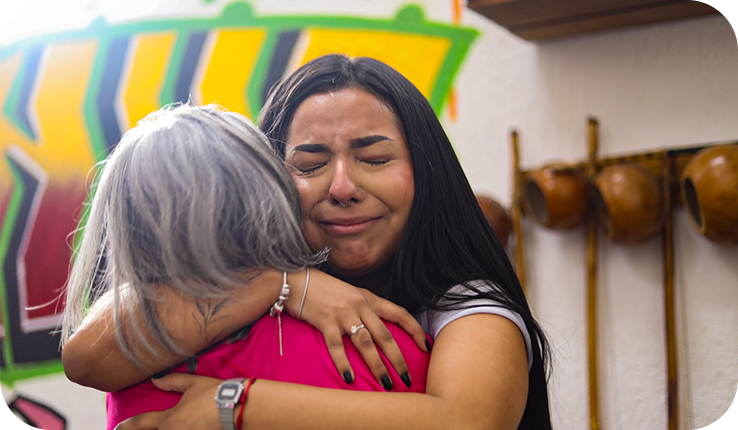
Over 60% of ASMARA participants identify as Black women, many of whom have endured abusive relationships and attempted femicides, with more than 50% being single mothers in São Paulo’s favelas. More than 50% revealed they had never had access to a decent income, and for most, ASMARA represents their first opportunity to generate income.
And here is what they say
Nome da mulher
Participant Asmara Project
I used to be quiet, without income, without dreams. In the first days trying to sell, I couldn't achieve anything. l almost gave up. But I tried again. And I made it.
Today I am an entrepreneur. I have my own income. And I'm proud of myself. Incluir o nome da pessoa que falou essa quote" - Jacqueline participant ASMARA project.
D. neuza
Participant Asmara Project
"When I joined the project, I had lost half of my teeth, and I didn’t smile. Today, I can smile."
andriesia
Participant Asmara Project
"For me, being a MARA is being able to look in the mirror and see myself as a woman. I have my own money. I no longer depend on my husband."